Engineering a Colorful Cross-Section: How Fruit Distribution Is Controlled in Industrial Bagel Production
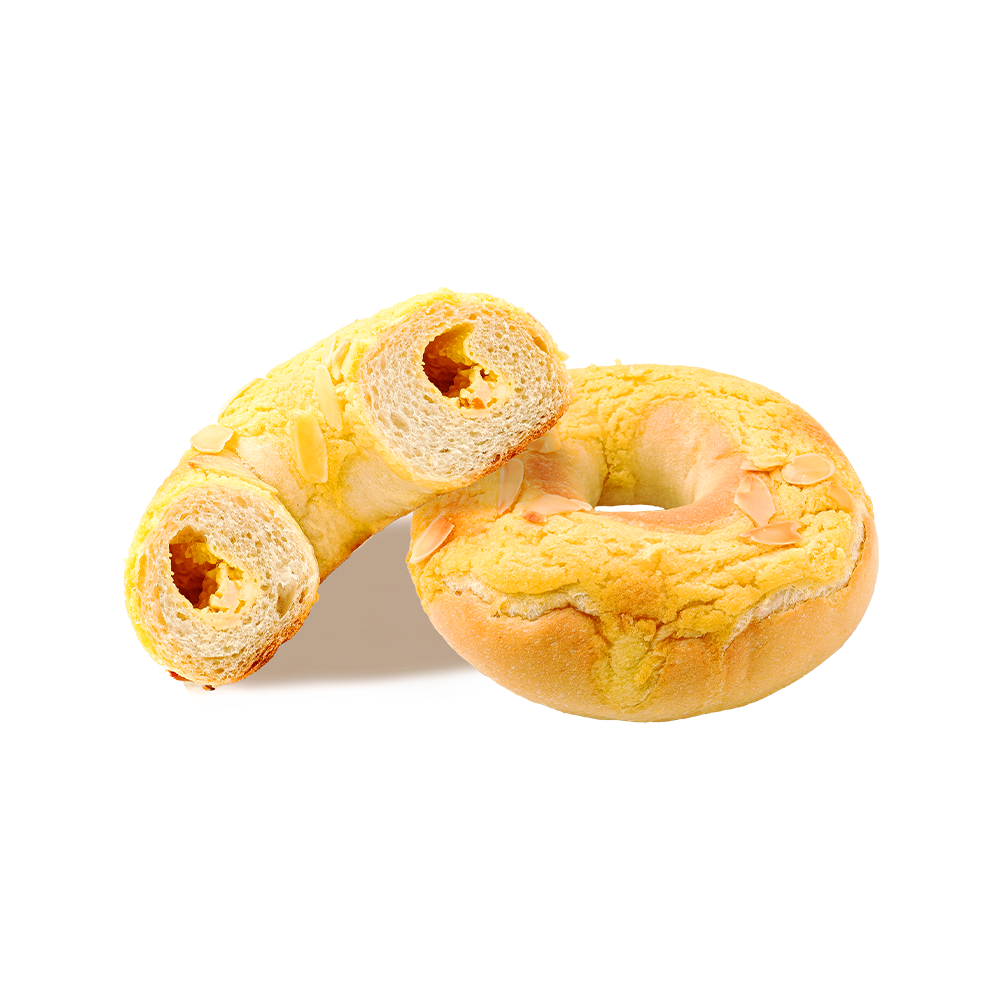
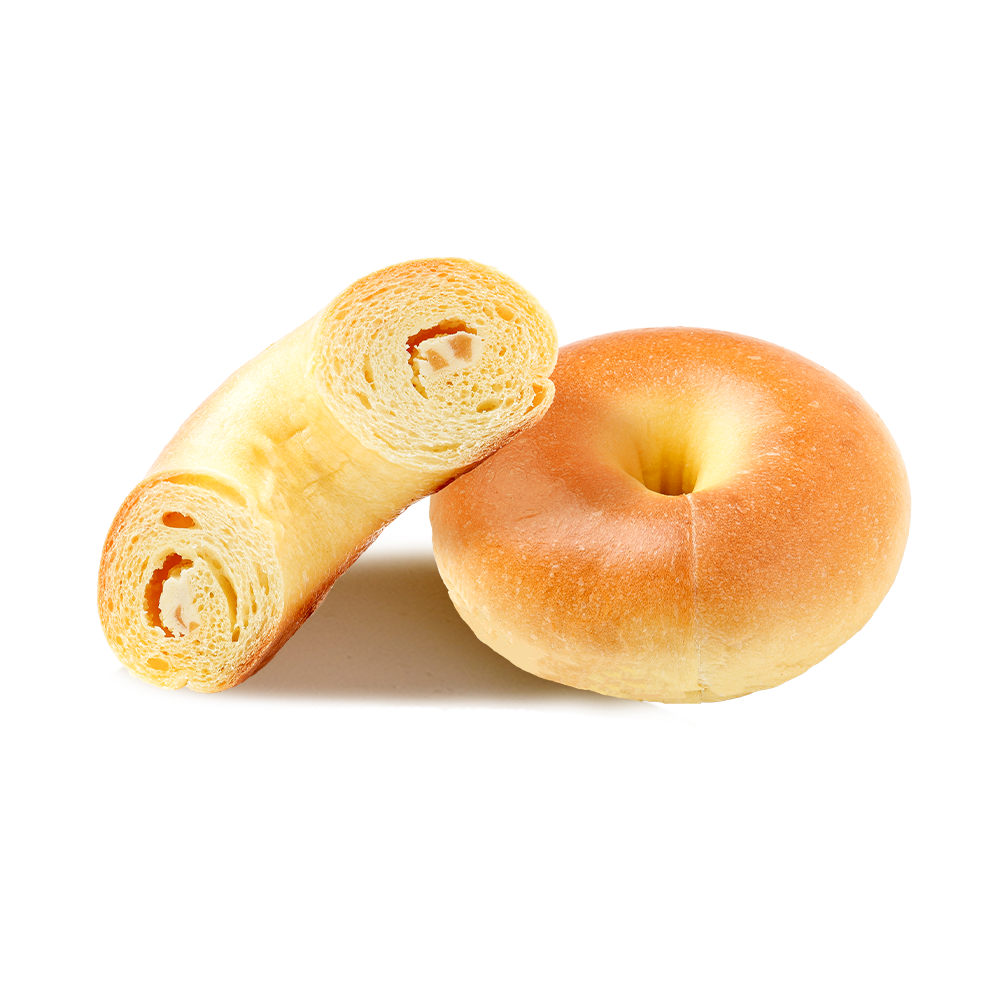
The visual impact of a colorful cross-section in a Fruits Bagel is not a random outcome — it is the result of deliberate engineering decisions made at the dough mixing and shaping stages. When fruit pieces are incorporated into bagel dough, their distribution pattern in the finished product is determined by three variables: the point in the mixing cycle at which fruit is added, the size and geometry of the fruit pieces, and the mechanical action applied during shaping. Adding fruit pieces too early in the mixing cycle subjects them to excessive mechanical shearing, which breaks them into uneven fragments and smears their pigments throughout the dough rather than preserving discrete, visually distinct color zones. The standard protocol is to add fruit inclusions in the final 60–90 seconds of mixing, once gluten development is essentially complete, so that pieces are folded in with minimal mechanical damage. Piece geometry also matters significantly for cross-section aesthetics: cubic or irregular-cut pieces create a more naturalistic, artisanal visual impression, while uniform dice cuts produce a predictable grid-like distribution that reads as more commercially controlled. At Jiangsu Goobagel Food Technology Co., Ltd., cross-section visual standards are part of the quality specification for each Fruits Bagel SKU — documented with reference photography and minimum visible piece count per cross-section — ensuring that the colorful cross-section appearance that drives retail shelf appeal and social media photography is consistent across production batches, not just in development samples.
Color Stability in Baked and Frozen Fruit Bagels: Pigment Chemistry and Practical Interventions
Achieving a vivid, colorful cross-section in a finished Fruits Bagel requires more than selecting brightly colored fruit — it demands an understanding of the specific pigment chemistry involved and the conditions under which each pigment degrades. The primary natural pigment classes present in common bagel fruit inclusions behave very differently under baking and frozen storage conditions. Anthocyanins, responsible for the red, purple, and blue tones of blueberries, strawberries, and cranberries, are water-soluble and highly sensitive to pH: in alkaline dough environments (which bagel dough can approach due to malt or baking soda additions), anthocyanins shift from red to blue-green tones, often producing visually unappealing grey-purple smearing around fruit pieces. Carotenoids, which provide the yellow and orange tones of mango, apricot, and papaya inclusions, are fat-soluble and relatively heat-stable, but vulnerable to oxidative bleaching during extended frozen storage. Chlorophyll-based greens from kiwi or lime zest are highly heat-sensitive and typically degrade to dull olive tones during baking unless conversion to more stable pheophytin forms is managed through acidic pH adjustment. Goobagel Food's R&D approach to color stability in natural flavors fruit inclusions involves adjusting the local dough pH around the inclusion zone, selecting fruit formats (freeze-dried vs. IQF vs. dried) based on the pigment class involved, and specifying packaging with appropriate oxygen barrier properties to protect carotenoid-rich inclusions during frozen distribution.
Natural Flavors in Fruit Bagels: How "Natural" Is Defined and What It Means for Formulation
The term "natural flavors" carries specific regulatory meaning that differs across markets and has direct implications for how a Fruits Bagel product can be labeled and marketed. In China, GB 2760 defines natural flavoring substances as those derived from animals, plants, or microorganisms through physical, microbiological, or enzymatic processes — meaning solvent extraction, steam distillation, and fermentation-derived flavor compounds all qualify as natural. In the US, FDA 21 CFR 101.22 uses a similar definition but includes an important nuance: a natural flavor must be derived from the characterizing ingredient it is intended to represent, or it must be disclosed as a "natural flavor" without specifying origin. In the EU, Regulation EC 1334/2008 is the most restrictive, requiring that a "natural strawberry flavor" can only carry that name if at least 95% of the flavoring component is actually derived from strawberries. This regulatory landscape matters practically because many cost-effective "natural strawberry" or "natural blueberry" flavors on the market are actually derived from non-characterizing natural sources (wood pulp fermentation, for example) and can only be labeled "natural flavor with other natural flavors" in EU-compliant products. For a Classic Bagel Manufacturer like Jiangsu Goobagel Food Technology Co., Ltd. supplying OEM clients across multiple markets, maintaining a library of market-specific natural flavor specifications — rather than a single global standard — is an operational necessity that the company's integrated supply chain and R&D infrastructure is specifically structured to support.
Fruit Format Selection and Its Impact on Baked Texture and Visual Performance
The format in which fruit is incorporated into a Fruits Bagel — freeze-dried, IQF, dried, or purée — has a decisive impact on both the colorful cross-section appearance and the textural contrast the inclusion delivers in the finished product. Each format presents a different balance between color intensity, structural integrity after baking, moisture contribution, and cost. The table below summarizes the performance characteristics most relevant to visual and textural quality in a baked bagel application:
| Fruit Format |
Color Vibrancy in Cross-Section |
Texture After Baking |
Moisture Impact on Dough |
Natural Flavor Intensity |
| Freeze-dried pieces |
Excellent; pigments concentrated |
Soft-chewy after rehydration in bake |
Low pre-bake; absorbs dough moisture |
Very high; concentrated sugars and volatiles |
| IQF pieces |
Good; close to fresh fruit color |
Tender; slight cell wall softening from freeze |
High; requires dough hydration adjustment |
High; fresh fruit volatiles largely retained |
| Dried pieces (sulfite-free) |
Moderate; darker, more concentrated hue |
Chewy, dense; good textural contrast |
Low; minimal moisture release |
Moderate; caramelized, raisin-like notes dominant |
| Fruit purée (swirl) |
Dramatic; marbled color throughout crumb |
Seamlessly integrated; no distinct piece texture |
Significant; formula recalculation required |
Moderate-high; flavor distributed throughout crumb |
Social Media Viability as a Product Design Criterion for Colorful Fruit Bagels
For tea brands, café chains, and specialty bakery operators in China, the visual documentation of a Fruits Bagel on social platforms such as Xiaohongshu, Douyin, and WeChat moments has become a primary driver of initial consumer trial — meaning the colorful cross-section of the product functions as a marketing asset as much as a sensory feature. This represents a genuine shift in product development priorities: a bagel whose cross-section photographs compellingly under typical café or home lighting conditions generates organic sharing that a product with equivalent taste but less visual drama simply cannot replicate. Translating this into product development terms, the cross-section must meet several photographic criteria simultaneously: the background crumb color should provide sufficient contrast to make fruit pieces legible (a golden-brown crumb sets off red and purple inclusions more effectively than a pale or grey crumb); fruit pieces should be large enough to register distinctly in a standard smartphone photograph (pieces smaller than 8mm diameter tend to read as specks rather than identifiable fruit); and the cross-section should be structurally stable enough that the visual is reproducible — a bagel whose colorful cross-section only appears when sliced at a precise angle is commercially unreliable. Jiangsu Goobagel Food Technology Co., Ltd. has incorporated photographic evaluation into its product sign-off process for Fruits Bagel development, capturing standardized cross-section photography under controlled lighting conditions and validating that the visual performance in the development kitchen translates to consistent results in production-scale batches — a step that bridges product quality and marketing effectiveness in a way that is increasingly expected by brand partners across China's food and beverage industry.
Combining Multiple Fruit Inclusions: Flavor Harmony, pH Compatibility, and Visual Contrast
A Fruits Bagel carrying multiple fruit varieties delivers a more complex natural flavors profile and a richer colorful cross-section than a single-fruit product, but multi-fruit formulation introduces compatibility challenges that require systematic evaluation before finalizing a blend. Three dimensions of compatibility must be assessed concurrently:
- Flavor harmony: Not all fruit combinations produce a coherent flavor impression in a baked application. Tart berries (cranberry, sour cherry) pair naturally with sweeter fruits (mango, peach) because the acidity of the former amplifies the perceived sweetness of the latter through contrast. Conversely, combining multiple high-acid fruits (lemon zest, passion fruit, cranberry) can produce an aggressively sour flavor profile that overwhelms the mild, yeasty character of the bagel crumb — a balance issue that is particularly acute in products targeting mainstream consumers rather than specialty food enthusiasts.
- pH compatibility: Different fruit inclusions carry different organic acid loads that affect the local dough pH around each piece. High-acid inclusions (citrus zest, passion fruit pieces) can locally inhibit yeast activity if concentrated in one area of the dough, creating uneven proofing and irregular crumb structure near inclusion clusters. This is managed at Goobagel Food by limiting the combined acid contribution of all fruit inclusions to a maximum tolerable level relative to total dough weight, verified through small-scale proofing trials before full formula sign-off.
- Visual contrast: A colorful cross-section requires that individual fruit varieties be visually distinguishable from one another and from the crumb. Combining blueberry and blackcurrant, for instance, produces two inclusions of nearly identical deep purple tone — the cross-section reads as monochromatic rather than colorful. Effective multi-fruit visual design requires deliberate selection of inclusions from across the color spectrum: a combination of red (strawberry), yellow (mango or pineapple), purple (blueberry), and green (kiwi or lime zest) delivers maximum visual diversity within a single product and creates the kind of striking cross-section that performs well both on the retail shelf and in social media content generated by café chain operators using Jiangsu Goobagel Food Technology Co., Ltd.'s Supply Custom Classic Bagel service.

 中文简体
中文简体